Poetry Chaikhana Blog Sacred Poetry from Around the World

A chinese lion statue

What is a Chaikhana?

A chaikhana is a teahouse along the legendary Silk Road pilgrimage and trading route linking China to the Middle East and Europe. It is a place of rest along the journey, a place to shake off the dust of the road, to sip tea, and to gather together to sing songs of the Divine...

Anna Akhmatova - A land not mine

Ivan M. Granger July 7th, 2008

A land not mine, still
by Anna Akhmatova

English version by Jane Kenyon

A land not mine, still
forever memorable,
the waters of its ocean
chill and fresh.

Sand on the bottom whiter than chalk,
and the air drunk, like wine,
late sun lays bare
the rosy limbs of the pinetrees.

Sunset in the ethereal waves:
I cannot tell if the day
is ending, or the world, or if
the secret of secrets is inside me again.

— from Women in Praise of the Sacred: 43 Centuries of Spiritual Poetry by Women, Edited by Jane Hirshfield


/ Photo by Wolfgang Staudt /

This is a favorite poem of mine from Anna Akhmatova. Though she wrote during some of the bleakest times of Soviet Russia, there are moments of radiant — one might even say, mystical — joy that emerges in her poems.

This particular poem conveys the powerful, yet utterly intimate experience of many mystics in the ecstatic state.

Often, there is a perception of “water.” It is seen as white or golden, shining. It is as if one is embraced by a living golden ocean, floating in it.

And there is also a sense of drinking, or of a subtle liquid or sweet “air” flowing gently down the back of the throat. There is an awareness of sweetness almost tasted on the palette that can have a divinely inebriating quality. Akhmatova speaks of drinking air “like wine.”

She refers to the sun — light, radiance everywhere.

Soon, you find yourself asking, Is the day ending, or the world? Ultimately, you find it is you who are ending. The train of mental chatter has come to a screeching halt, and you are surprised to find how much that busyness of thought had restricted your perception, allowing you only brief, blurred glimpses. The world and what you called yourself are not as you thought at all, and both are new and alive and too vast to be called your own.

Then you know that the secret of secrets is within you. And it is so deeply familiar you must have known it before, and it is there again.

Anna Akhmatova, Anna Akhmatova poetry, Secular or Eclectic poetry Anna Akhmatova

Russia (1889 - 1966) Timeline
Secular or Eclectic

Continue Reading »

Video: Dancing Around the World

Ivan M. Granger July 7th, 2008

For the first few seconds this video seems silly. Then you realize how delightful it is. And by the end, something profound has emerged — a feeling of unity around the world.

Take a few minutes to watch this video. Don’t forget to kick up your heels and join in.

Natsume Soseki - The lamp once out

Ivan M. Granger July 4th, 2008

The lamp once out
by Natsume Soseki

English version by Soiku Shigematsu

The lamp once out
Cool stars enter
The window frame.

— from Zen Haiku: Poems and Letters of Natsume Soseki, by Natsume Soseki / Translated by Soiku Shigematsu


/ Photo by George Lu /

It’s the Fourth of July, Independence Day here in the US. I loved fireworks and firecrackers as a child. Anything with fire and sparks and explosions, well that was just fine by me. The bigger the bang the better!

This haiku, however, is one that leaves me in silence. It makes me think a little more about what independence and freedom are really about…

On the most literal level, Natsume Soseki is giving us the image of a lamp going out. When that strong, close light is no longer there, our eyes can then see the stars in the night sky through the window. Just three lines is enough to give us that beautiful moment.

But, of course, the meaning expands, with several possible meanings. One way to read it is that the lamp light could suggest the ego. That is the familiar light we normally live by. It is useful in that it allows us to interact effectively with the immediate environment. But we forget that it also affects our focus and limits our full vision. It is only when it finally goes out, that we can see vastness of the night sky and its glistening, heavenly stars…

Natsume Soseki, Natsume Soseki poetry, Buddhist poetry Natsume Soseki

Japan (1867 - 1916) Timeline
Buddhist : Zen / Chan

Continue Reading »

Points of perception

Ivan M. Granger July 4th, 2008

We aren’t so much individual beings
as individual points of perception
within one immense being.

Lalan - As the man and woman in me

Ivan M. Granger July 2nd, 2008

As the man and the woman in me
by Lalan

English version by Deben Bhattacharya

As the man and the woman in me
Unite in love,
The brilliance of beauty
Balanced on the bi-petalled
Lotus bloom in me
Dazzles my eyes.
The rays
Outshine the moon
And the jewels
Glowing on the hoods of snakes.

My skin and bone
Are turned to gold.
I am the reservoir of love,
Alive as the waves.

A single drop of water
Has grown into a sea,
Unnavigable…

— from The Mirror of the Sky: Songs of the Bauls of Bengal, Translated by Deben Bhattacharya


/ Photo by Per Ola Wiberg..(PO…or Powi) /

These few lines are packed with the encoded alchemical language of Bengali Tantric Yoga. Let’s have some fun exploring its inner meaning.

As the man and the woman in me
Unite in love…

The man and woman that unite are “in me;” they are internal principles. It is the uniting of the masculine and feminine energies within the individual. This union in love, is the harmonizing of the solar and lunar energetic pathways that run parallel to the spine, called the ida and the pingala in Yoga.

When these masculine and feminine energies are brought into stable balance, the central energetic channel, called the shushumna, opens, allowing the primary life force, the Kundalini, to rise to the brow, to the two-petalled chakra, sometimes referred to as the third eye:

The brilliance of beauty
Balanced on the bi-petalled
Lotus bloom in me
Dazzles my eyes.

Continue Reading »

Faith and Grace

Ivan M. Granger July 2nd, 2008

Faith is recognizing that we are always, irrevocably
being drawn into the Divine Embrace.

Grace is what occurs
when we stop obstructing that natural process.

Video & Music: Suburban Harmony by Telemetry Orchestra

Ivan M. Granger July 2nd, 2008

The animation hearkens back to the work of Peter Maxx in the 60s and 70s, a la Yellow Submarine. But this comes with a sleepy, casual groove. Gives a sense of the easy, overlooked magic of the world.

Break out the flared pants and enjoy!

Sarmad - Every man who is aware of his secret

Ivan M. Granger June 27th, 2008

Every man who is aware of his secret
by Sarmad

English version by Dr. Zahurul Hasan Sharib

Every man who is aware of his secret
He becomes concealed even from the skies.
The mullah says that Ahmad went to the heavens
Sarmad says that the heavens were inside Ahmad!


/ Photo by beggs /

Every man who is aware of his secret
He becomes concealed even from the skies.

Isn’t that a great opening half to this quatrain? When we become aware of the secret contained within us, the ego self disappears. What most people think of when they call you a person becomes “concealed… even from the skies.”

The mullah says that Ahmad went to the heavens
Sarmad says that the heavens were inside Ahmad!

These closing lines are saying something interesting too. Islamic religious tradition (taught by the mullahs or spiritual leaders) tells of the Mi’raj when the Prophet Mohammed (Ahmad) journeys to the Dome of the Rock / Al-Aqsa Mosque on the Temple Mount in Jerusalem, and from there ascends into the heavens, where he converses with other prophets and, ultimately, God.

Sarmad, with the mystic’s instinct, turns this inward, declaring that the Mi’raj was not an external journey, but a journey within, for “the heavens were inside Ahmad!” This declaration makes the journey to heaven available to us all; we may not all be prophets, but we all can discover the same heavenly core within ourselves.

Continue Reading »

Through you…

Ivan M. Granger June 27th, 2008

Divine purpose moves through you.

The only question is
whether you pretend to fight it.

Thomas Traherne - Love

Ivan M. Granger June 25th, 2008

Love
by Thomas Traherne

      O nectar! O delicious stream!
O ravishing and only pleasure! Where
      Shall such another theme
Inspire my tongue with joys or please mine ear!
      Abridgement of delights!
      And Queen of sights!
O mine of rarities! O Kingdom wide!
O more! O cause of all! O glorious Bride!
      O God! O Bride of God! O King!
      O soul and crown of everything!

      Did not I covet to behold
Some endless monarch, that did always live
      In palaces of gold,
Willing all kingdoms, realms, and crowns to give
      Unto my soul! Whose love
      A spring might prove
Of endless glories, honours, friendships, pleasures,
Joys, praises, beauties and celestial treasures!
      Lo, now I see there’s such a King.
      The fountain-head of everything!

      Did my ambition ever dream
Of such a Lord, of such a love! Did I
      Expect so sweet a stream
As this at any time! Could any eye
      Believe it? Why all power
      Is used here;
Joys down from Heaven on my head do shower,
And Jove beyond the fiction doth appear
      Once more in golden rain to come

      To Danae’s pleasing fruitful womb.
      His Ganymede! His life! His joy!
Or He comes down to me, or takes me up
      That I might be His boy,
And fill, and taste, and give, and drink the cup.
      But those (tho’ great) are all
      Too short and small,
Too weak and feeble pictures to express
The true mysterious depths of Blessedness.
      I am His image, and His friend,
      His son, bride, glory, temple, end.

— from Poetry for the Spirit: Poems of Universal Wisdom and Beauty, Edited by Alan Jacobs


/ Photo by alicepopkorn /

This poem by Traherne is almost breathless in its ecstatic exclamations. Though highly structured in meter and rhyme, he just barely seems to be able to get the words onto the page.

The first verse is an overwhelm of bliss and images: nectar, a stream, a kingdom, a king, a bride, a crown.

Why does Traherne start his poem with descriptions of “nectar,” a “delicious steam” that more than anything else can “inspire my tongue with joys”? The ecstatic state is often interpreted by the sense-mind as a beautiful, rich sweetness on the upper palette and at the back of the throat, accompanied by a warmth in the belly. Because there is also a humming in the inner ear and often a visual awareness of a glowing gold or white color (”golden rain”), this experience is often compared to honey or a heavenly ambrosia. The experience is also accompanied by a blissful giddiness and, sometimes, a trembling or other body movements that can mimic drunkenness, so mystics also refer to this subtle liquid as wine: “And fill, and taste, and give, and drink the cup.”

In Christian symbolic language, the King, of course, is Christ, or more generically the personal aspect of God. The Bride is the purified individual soul that joins with the Divine and discovers ecstasy in holy union.

In the second verse, Traherne lists what he had been seeking all his life, what he imagined God to be: endless power, love, glory, beauty… the source of everything. But the next verse moves out of the conceptual to a revelation of what he has actually experienced. And he is flabbergasted to discover that as rich as his mental concepts of the Divine had been, the direct experience is greater still. “Did my ambition ever dream / Of such a Lord, of such love!” Love, true divine love that rejects nothing and embraces everything is just a philosophical idea until it is actually felt — and then you realize the idea hardly hinted at the reality. This is accompanied by a sense of wholeness and bliss that descends upon the awareness, “Joys down from Heaven on my head do shower.”

The final verse is the most personal. Traherne sees himself as Danae impregnated by the divine golden shower, as Ganymede the beloved cupbearer of heaven. God has descended to him, or has lifted him up; he can’t tell, he doesn’t care. The divine living source of everything has, in the most intimate way, touched and claimed him.

But even these descriptions “tho’ great” can’t do justice to the reality. There are no satisfactory words for “The true mysterious depths of Blessedness.” The best he can do to put this relationship into words is to suggest that he now recognizes himself as a reflection of the Divine, an intimate, a vessel, a completed work: “I am His image, and His friend, / His son, bride, glory, temple, end.”

Thomas Traherne

England (1636? - 1674) Timeline
Christian : Protestant

Continue Reading »

Fade away

Ivan M. Granger June 25th, 2008

The goal of the ego is not perfection.

It’s ultimate goal is to fade away
in order to reveal the inherent perfection
already present.

Saadi - If one His praise of me would learn

Ivan M. Granger June 23rd, 2008

If one His praise of me would learn,
by Saadi

English version by Edward B. Eastwick

If one His praise of me would learn,
      What of the traceless can the tongueless tell?
      Lovers are killed by those they love so well;
No voices from the slain return.

— from The Gulistan of Sadi: The Rose Garden, Translated by Edward B. Eastwick


/ Photo by HAMED MASOUMI /

I love that line, “What of the traceless can the toungeless tell?”

There is actually a lot being said in these few lines, all circling around the wordlessness of true lovers of God. Why is it that lovers are “tongueless”? Why is it that lovers are “killed,” and the voices of the “slain” don’t return?

Sacred poetry often portrays death from an upside-down perspective in which death is sought with an enthusiasm that can, at times, sound almost suicidal. Without understanding of this imagery, it can sound as if every mystic and saint has some strange death wish.

In deep ecstasy, the sense of individuality, the sense of “I” thins and can completely disappear. Though you may still walk and breathe and talk, there is no “you” performing these actions. The separate identity, the ego, disappears, to be replaced by a vast, borderless sense of reality — the “traceless.” Suddenly, who you have always thought yourself to be vanishes and, in its place, stands a radiant presence whose boundaries are no longer perceived in terms of flesh or space.

It is this experience, this complete shedding of the limited body of the ego, that is the death so eagerly sought by mystics throughout time. This is what Saadi means by his statement, “Lovers are killed by those they love so well.”

This same death of the ego leads to a space beyond words. With the small self no longer in the way of true perception, reality is finally perceived as a unified wholeness. The mind ceases to cut its perception of reality into manageable little pieces. Everything, absolutely everything is recognized as part of that single wholeness. And that’s where words fail. Words can only ever apply to fragments of reality, particles of meaning. But in the lover’s vision of Oneness, words are no longer big enough to contain what is witnessed.

What then can one say? Lover’s fall silent. They are toungeless. In this sacred ‘death,’ one has no voice. Some mystics literally fall silent and cease to speak in awe of such Unity, while others may speak and write and sing… but inwardly they too are spacious, clear, silent. The use of words becomes at most a game, incapable of truly conveying the lover’s awe and praise. One can only hope that this game of words and incomplete meanings will point the way for others, that they too may one day find themselves toungeless.

Nuff said…

Saadi, Saadi poetry, Muslim / Sufi poetry Saadi

Iran/Per (1207? - 1291) Timeline
Muslim / Sufi

Continue Reading »

Gather silence

Ivan M. Granger June 23rd, 2008

Once you have gathered enough silence,
silence gathers you.

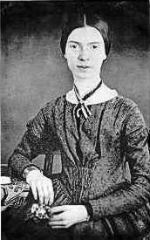
Emily Dickinson - There is a Zone whose even Years

Ivan M. Granger June 20th, 2008

[1056] There is a Zone whose even Years
by Emily Dickinson

There is a Zone whose even Years
No Solstice interrupt –
Whose Sun constructs perpetual Noon
Whose perfect Seasons wait –

Whose Summer set in Summer, till
The Centuries of June
And Centuries of August cease
And Consciousness — is Noon.

— from The Complete Poems of Emily Dickinson, Edited by Thomas H. Johnson


/ Photo by Bohman /

I know we just had a poem by Emily Dickinson last week, but I couldn’t pass up this poem on the summer solstice.

Light is one of the primary metaphors in sacred poetry, suggesting the Divine not framed within a mental concept. But for genuine mystics, this light is not a mere concept; it is directly experienced.

This sense of light is more than a brightness one might experience on a sunny afternoon. This light is perceived as being a living radiance that permeates everything, everywhere, always. This light is immediately understood to be the true source of all things, the foundation on which the physicality of the material world is built.

And Consciousness — is Noon.

This is the light of the true mystics.

Have a beautiful solstice — the time of year to celebrate the fulness of the light which sustains all life.

Emily Dickinson, Emily Dickinson poetry, Secular or Eclectic poetry Emily Dickinson

US (1830 - 1886) Timeline
Secular or Eclectic
Christian : Protestant

More poetry by Emily Dickinson

God meets God

Ivan M. Granger June 20th, 2008

Each one of us does not exist
except as an empty field
in which God meets God.
We are the flash of self-recognition
that lights the face of the Divine.

Video: Summer Solstice at Stonehenge

Ivan M. Granger June 20th, 2008

The summer solstice is upon us, one of the cardinal points of the year’s cycle. Time to celebrate the light at its peak, internalize it as the days inevitably grow shorter once again…

Stephen Levine - Millennium blessing

Ivan M. Granger June 18th, 2008

Millennium blessing
by Stephen Levine

There is a grace approaching
that we shun as much as death,
it is the completion of our birth.

It does not come in time,
      but in timelessness
when the mind sinks into the heart
and we remember.

It is an insistent grace that draws us
to the edge and beckons us to surrender
safe territory and enter our enormity.

We know we must pass
      beyond knowing
and fear the shedding.

But we are pulled upward
      none-the-less
through forgotten ghosts
      and unexpected angels,
luminous.

And there is nothing left to say
but we are That.

And that is what we sing about.

— from Breaking the Drought: Visions of Grace, by Stephen Levine


/ Photo by Stoker Studios /

There is a grace approaching
that we shun as much as death,
it is the completion of our birth.

The lines of this poem are deceptively simple. It’s one of those poems that is easy to read and then move on with the rest of the day…

It does not come in time,
      but in timelessness
when the mind sinks into the heart
and we remember.

…But the words trail after you, quietly ringing at the back of your thoughts, gently haunting the comfort of our routines and routine relationships with the world.

It is an insistent grace that draws us
to the edge and beckons us to surrender
safe territory and enter our enormity.

These are words that lead us to silence. What else is there to say?

And there is nothing left to say
but we are That.

And that is what we sing about.

Stephen Levine, Stephen Levine poetry, Secular or Eclectic poetry Stephen Levine

US (1937 - )
Secular or Eclectic

Continue Reading »

Next »